
Employee performance plays an important role in business growth. Companies need a clear way to review employee work, track progress, and help people improve their skills. Traditional employee appraisals have served this purpose for years, but modern workplaces need a more flexible approach.
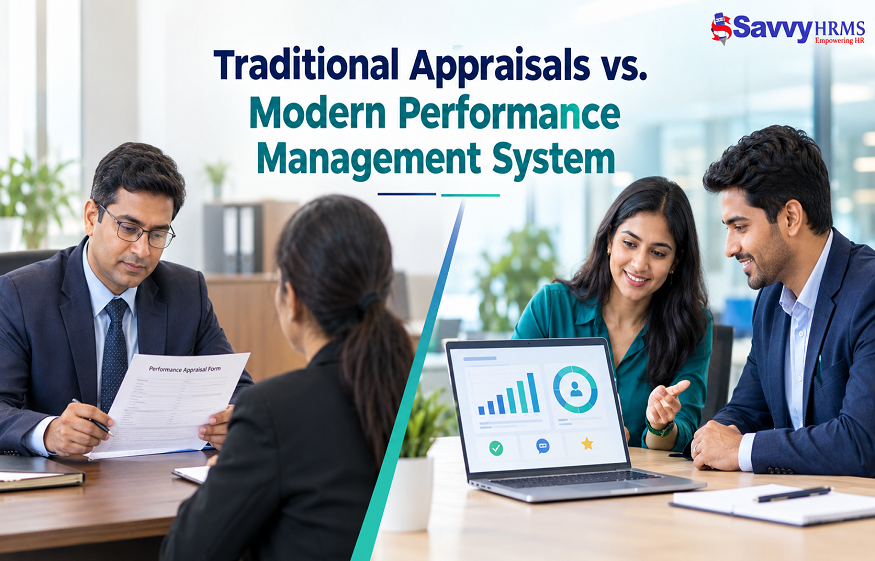
Traditional appraisals focus on reviewing past performance at fixed intervals. Modern performance management software focuses on regular feedback, clear goals, and employee development throughout the year.
Understanding the difference helps businesses choose an approach that supports employee growth and business goals.
What Is Traditional Performance Management?
Traditional performance management is a formal process where managers evaluate employee performance at set times, often once a year or every six months. They review completed work, measure results against fixed goals, and assign performance ratings.
This approach gives businesses a clear structure for reviewing employees. However, employees may receive feedback only during formal appraisal meetings. This can make it harder to address performance issues when they first appear.
For example, if an employee struggles to meet a target in March, they may not receive detailed feedback until the next scheduled review. By then, they may have missed several chances to improve.
Read More: How Frequency Converters Improve Manufacturing Efficiency
What Is Modern Performance Management?
Modern performance management is an ongoing process that helps employees improve through regular feedback, goal tracking, and development plans. Instead of waiting for an annual appraisal, managers discuss progress with employees throughout the year.
This approach also allows teams to update goals when business priorities change. Employees can share challenges, ask for support, and understand what they need to do next.
For example, a manager can review an employee’s monthly progress, discuss challenges, and suggest ways to improve. This gives the employee time to act on feedback before the next formal review.
Traditional vs. Modern Performance Management System: Key Differences
Both approaches aim to improve employee performance, but they differ in how they review work, share feedback, and support growth.
| Comparison point | Traditional approach | Modern approach |
| Review frequency | Annual or half-yearly | Regular check-ins |
| Main focus | Past performance | Continuous improvement |
| Feedback | Formal and periodic | Regular and ongoing |
| Goal setting | Often fixed | Can change with business needs |
| Employee involvement | Mainly manager-led | Encourages participation |
| Tracking | Past review records | Ongoing progress updates |
| Technology | Paper forms or spreadsheets | Digital tools and dashboards |
| Development | Often discussed during appraisals | Supported throughout the year |
What Are the Advantages of Traditional Performance Management?
Performance management through traditional systems continues to benefit organizations that require formal employee evaluation methods. Its main advantages include:
1. Clear Review Structure
The establishment of fixed schedules enables managers to arrange appraisal meetings while they follow an identical procedure throughout all organizational units. Employees also know when their performance will be reviewed.
2. Consistent Evaluation Criteria
Businesses can use common rating scales and predefined standards to review employees. The process achieves standardization because of this approach but managers need to actively monitor their individual prejudices because they remain in control of the system.
3. Formal Performance Records
Traditional appraisal systems generate documentation which shows employee accomplishments together with their performance ratings and development needs. Organizations can use these records directly to support their decisions about employee promotions and salary adjustments and training requirements.
The system fails to provide adequate support for users during their inactive days which occur between their working days. Employees require ongoing feedback sessions because their work objectives and company standards keep changing over time.
What Are the Advantages of Modern Performance Management?
Modern performance management software offers organizations multiple methods to assist their staff members in achieving their development objectives. The system unites regular contact with specific targets and ongoing progress monitoring.
1. Regular Feedback
Managers need to address performance problems when they occur instead of postponing them until the next scheduled appraisal. The system provides employees with multiple opportunities to fix their errors while they can also seek clarification and enhance their performance.
2. Flexible Goal Setting
Business priorities tend to change during the year. A modern approach allows managers and employees to review goals and update them when projects, targets, or responsibilities change.
3. Better Employee Involvement
Employees need to participate actively in the process of establishing objectives, and they should conduct self-assessments and engage in performance evaluation meetings. The process allows staff members to understand their assigned duties while they can provide feedback about their work development.
4. Focus on Learning and Development
The current performance management software requires staff members to conduct evaluations that go beyond their previous rating system. Managers have the ability to discover employee skill deficiencies which they can address through training programs, and support staff members in developing their career advancement strategies.
5. Informed Decisions
The combination of performance records with regular progress updates enables managers to evaluate how their employees perform at work. Organizations that base their choices on specified standards and dependable data sources will make better decisions about staff advancement opportunities.
Why Are Companies Moving Towards Modern Performance Management?
Organizations have moved past annual performance reviews because their staff members require immediate feedback and adaptable operational methods. Multiple elements enable this transformation to take place.
- Changing Business Goals:Organizations must adjust their employee performance targets because their business direction, client demands and operational plans experience changes.
- Need for regular feedback: Employees receive better results when they get immediate feedback instead of waiting several months to discuss their work performance.
- Focus on employee growth: Businesses need to find their skill gaps while helping their employees learn new things throughout the entire year.
- Remote and hybrid work: Teams that operate from different locations need to establish specific targets while they should keep in touch regularly and obtain straightforward access to their performance data.
- Better use of data: Managers need useful performance records to understand progress and make informed decisions.
The ongoing needs of present-day workplaces demand continuous methods to fulfill their requirements. Organizations must select suitable processes that match their team dimensions, organizational environment and achievement targets.
Which Approach Is Better for Modern Workplaces?
A modern Performance Management System is often a better fit for businesses that need regular feedback, flexible goals, and ongoing employee development. It helps managers identify performance gaps earlier and support employees throughout the year.
Traditional appraisals can still be useful when businesses need formal ratings, fixed review schedules, and documented decisions. The two approaches do not have to work separately.
Read More: How AI SEO Analyzes Search Intent Better Than Traditional Methods
Businesses can combine formal appraisals with regular check-ins, clear goals, and employee development plans. This gives HR teams a structured review process while helping employees receive feedback throughout the year.
The best approach is one that sets clear expectations, supports fair evaluations, and helps employees improve.
Conclusion:
Overall, Traditional employee appraisals provide a structured way to review past performance, while modern performance management focuses on continuous feedback, flexible goals, and employee development.
Businesses can continue using formal appraisals while adding regular check-ins and performance tracking. With the right process and tools, managers can support employees more effectively and keep their goals aligned with business needs.
Want to Make Employee Performance Management Easier?
Book a free demo today and explore how a Savvy HRMS can simplify your HR processes and support employee growth.